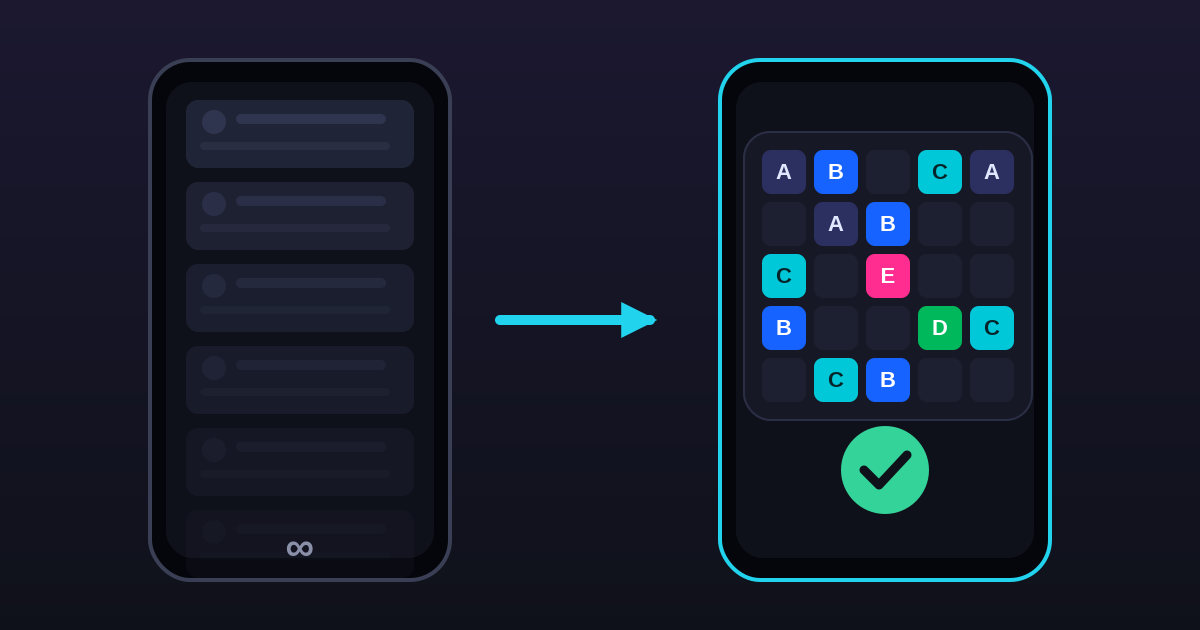
Quick answer: When you catch yourself reaching for a social feed, open a short puzzle instead. A feed is built to have no ending; a puzzle like PULL has a clear finish. Five minutes of tapping letters together gives your mind one absorbing task, ends with a win, and lets you put the phone down, instead of trapping you in an infinite scroll. The most relaxing puzzles have no timers, calm visuals and a natural place to stop.
You open your phone to check one thing. Twenty minutes later you're still scrolling, through news, posts and videos you didn't choose, and you feel worse than when you started. Many people call this doomscrolling. The good news is that you don't have to give up your phone to break the habit. You can give your thumb something better to do.
What is doomscrolling?
Doomscrolling is the habit of scrolling through an endless stream of news or social posts, often bad news, long after it stops being useful or enjoyable. The word became widely used in 2020, but the pattern is as old as the infinite feed itself.
The key word is endless. Infinite scroll (feeds that load more as you reach the bottom) was popularised in the mid-2000s. Designer Aza Raskin, who is widely credited with inventing it, has since spoken publicly about regretting how it keeps people scrolling. With no bottom of the page, there's never a natural moment to stop.
Why does a puzzle work better than a feed?
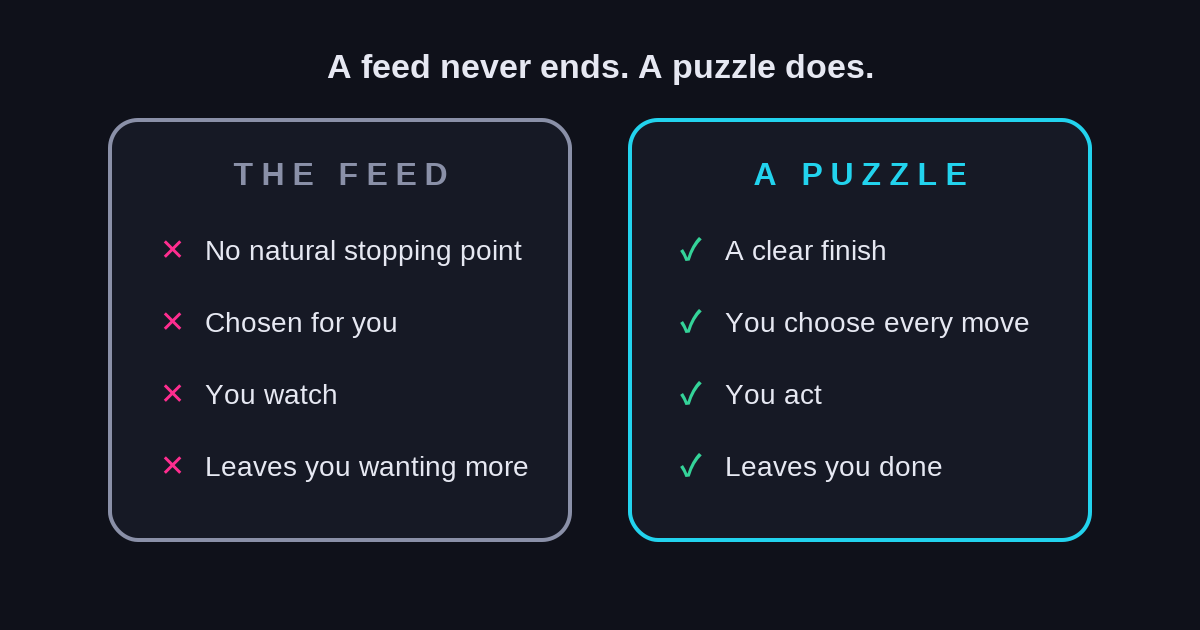
A puzzle has an ending. You solve it, or you run out of moves, and that's it. That finish line is exactly what a feed is missing.
You're doing, not watching. In a feed, someone else chooses what you see. In a puzzle, you decide every move. That shift from passive to active is what makes a puzzle absorbing rather than draining.
It fills the same gap. Doomscrolling usually happens in small, idle moments: a queue, a commute, the minutes before bed. A short puzzle fits the same moments, so it can replace the habit instead of fighting it.
It ends on a win. Finishing a puzzle gives you a small sense of completion, a better note to put the phone down on than the next headline.
Why do puzzles help you unwind?
They narrow your focus. A puzzle gives your mind one clear, well-defined problem. While you're thinking about which tile to tap, there's little room left for the day's worries.
They can bring on "flow". Psychologist Mihaly Csikszentmihalyi described flow as the state of being fully absorbed in an activity, where the challenge is well matched to your skill and time seems to slip by. Puzzles are a classic route there: hard enough to hold your attention, not so hard that you feel stuck.
They give a sense of order. Turning a messy board into a neat one brings a small, satisfying sense of completion.
They're under your control. Unlike the news, a puzzle only does what you choose to do.
How do you swap doomscrolling for a puzzle?
Habits are easier to replace than to break. Keep the trigger (reaching for your phone), and change what happens next:
- Put the puzzle where the feed was. Move your most-scrolled app off your home screen, and put a puzzle game in its place. Your thumb goes to the same spot and finds something better.
- Pick a puzzle with a built-in finish. A daily puzzle is ideal: one per day, then you're done.
- Turn off feed notifications. Every buzz is an invitation back into the scroll.
- Decide on one game. "One puzzle, then phone away" is easy to keep.
- Notice how you feel afterwards. That's the reward that makes the new habit stick.
What makes a good anti-doomscroll game?
| Calming | Stressful |
|---|---|
| A clear finish, a natural point to stop | Endless rewards that keep you going |
| No timer: think as long as you like | Countdown clocks and speed bonuses |
| Mistakes are part of the fun | Harsh penalties or lost progress |
| Calm colours, sound you can switch off | Flashing effects and loud jingles |
| No notifications | Reminders pulling you back in |
| No pop-up ads mid-game | Constant interruptions |
| You make every move | Content chosen for you |
Avoid games that are themselves built like feeds. A good one is short, free to start, and happy to let you leave.
Are puzzles good before bed?
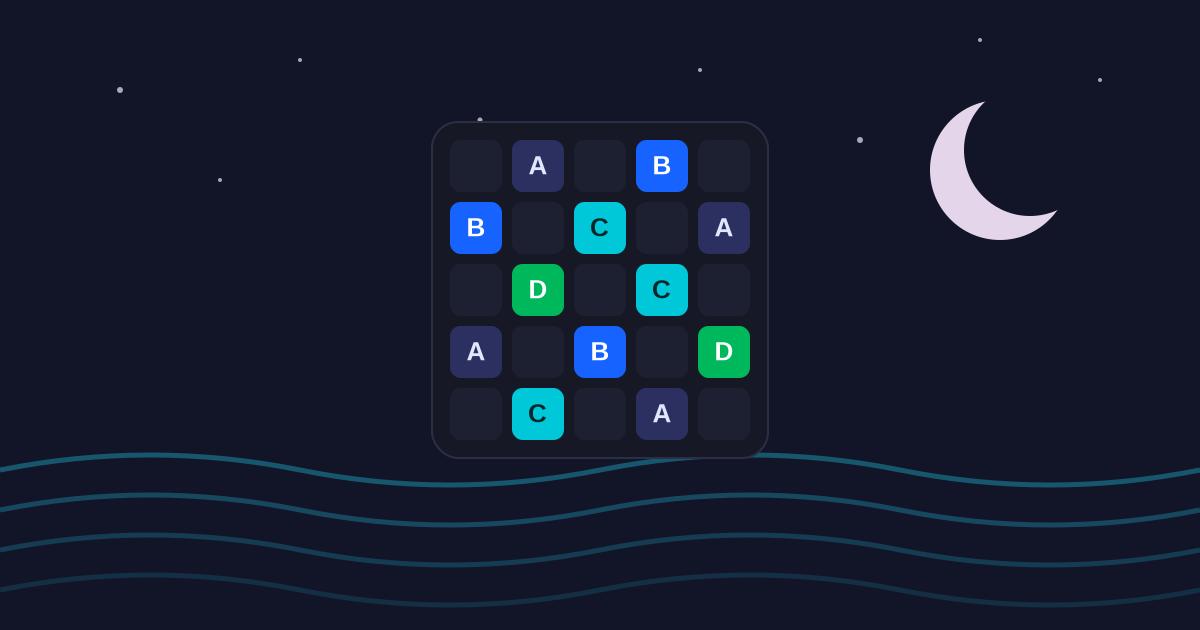
Late-night scrolling is one of the hardest habits to break. A single short, calm puzzle can be a gentler way to wind down, as long as it doesn't keep you awake. Sleep experts commonly suggest dimming screens and keeping late-evening screen time short, so:
- Play one game, then put the phone down. A daily puzzle has a natural end.
- Use night mode. Darker screens are easier on the eyes in a dim room.
- Turn the sound off.
- Don't chase streaks at bedtime. A streak should never keep you up.
Everyone is different: notice what works for you.
Why is PULL a good anti-doomscroll game?
PULL is a free puzzle that runs in your browser. Tap a letter, and every matching letter in its row and column slides toward it like a magnet; matching letters merge into the next letter, from A toward Z.
- Daily PULL has a hard stop. One puzzle a day, with 12 taps to make the letter E. Win or lose, you're done in a few minutes, and the next puzzle won't arrive until tomorrow.
- No feed and no notifications. PULL never buzzes you or tries to pull you back.
- No pop-up ads during play. Ads only appear if you choose to watch one for gems.
- No timer, ever. Take as long as you like over every move.
- Stop at any moment. If you play Endless, your board is saved after every tap, so you can close it mid-game without losing anything.
- Calm day and night themes, and sound you can switch off in Settings.
- Free, no download, no sign-up. Open pullgame.app and play.
Playing on a train or plane? See the best puzzle game for commutes and flights, which also works without a signal. And for more on building a gentle daily routine, read why one puzzle a day is so satisfying.
Key takeaways
- Doomscrolling thrives on feeds with no natural end.
- Puzzles help you unwind by focusing your mind on one absorbing task, sometimes bringing on "flow".
- A short puzzle fills the same idle moments, but it ends, and you're in control.
- Replace the habit rather than fight it: put a puzzle where your feed used to be.
- Choose games with a clear finish, no notifications and no mid-game pop-ups.
- Daily PULL gives you 12 taps and a natural stop, every day.
Frequently asked questions
What are good free browser games to replace doomscrolling?
Look for short puzzles with a clear finish, no feed and no notifications. Daily puzzles work especially well: PULL, a free letter merge puzzle that runs in any browser, gives you one puzzle a day with 12 taps to solve it, then you're done.
How do I stop doomscrolling?
Replace the habit rather than just resisting it. Move your feed apps off your home screen, put a short puzzle game in their place, turn off feed notifications, and decide on a simple rule such as one puzzle, then put the phone down.
Why is a puzzle better than scrolling?
A puzzle has a clear ending and you make every move, so it's active and finite. A feed is passive and designed to have no natural stopping point.
What are the most relaxing types of puzzle games?
Games without timers or harsh penalties: merge puzzles like 2048 and PULL, jigsaws, word searches and gentle daily puzzles.
Does PULL have a timer?
No. Neither the Daily puzzle nor Endless mode has a timer, so you can take as long as you like over every move.
Does PULL send notifications?
No. PULL never sends notifications, so there's nothing pulling you back to your phone. You play when you choose to.
How long does a Daily PULL take?
Usually just a few minutes. You have 12 taps to make the letter E, and there's no timer, so you can take as long as you like over each move.