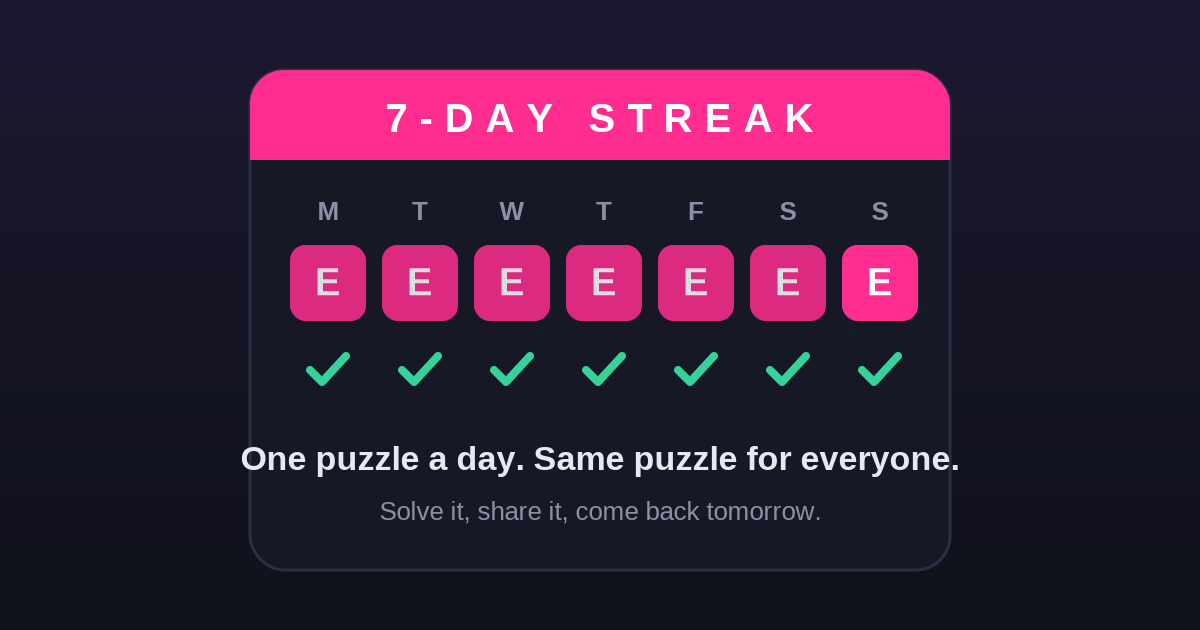
Quick answer: Daily puzzles give everyone the same challenge, once a day. That scarcity makes each puzzle feel special, the shared board gives friends something to compare, and a streak gives a gentle reason to come back. They're short, satisfying and hard to binge, which is exactly why so many adults love them.
A puzzle a day is one of the oldest habits in entertainment. Long before apps, millions of people started their morning with the newspaper crossword. Today the same ritual lives on phones, and it's as popular as ever.
Where did daily puzzles come from?
The first crossword is generally credited to Arthur Wynne, published in the New York World newspaper in December 1913. Crosswords soon became a daily fixture of newspapers around the world, joined over the decades by word jumbles, number puzzles and logic grids.
The modern revival came in late 2021 with Wordle, a free word game by software engineer Josh Wardle that offered just one puzzle a day, the same for everyone. It spread rapidly through shared results on social media, and The New York Times bought it in early 2022. Wordle's success inspired a wave of daily games of every kind: words, numbers, geography, music and merge puzzles.
Why are daily puzzles so satisfying?
One a day makes each puzzle matter. When you can't play the next one straight away, today's puzzle gets your full attention, and the solve feels earned.
Everyone plays the same puzzle. That turns a solo activity into a shared one. "How many taps did it take you?" is an easy conversation starter with friends, family and colleagues.
It fits any day. A daily puzzle takes a few minutes, so it slots into a coffee break or a commute.
Streaks give a gentle push. Seeing a run of days in a row is motivating, and a nudge to keep a healthy routine going.
You can't binge. Unlike endless games, there's a natural stopping point. You play, you finish, you get on with your day.
How do you enjoy daily puzzles without the stress?
Streaks are fun until they feel like an obligation. A few ways to keep the joy:
- Treat the streak as a bonus, not a duty. Missing a day doesn't undo the fun you've had.
- Play at the same moment each day. Tying the puzzle to a routine (first coffee, lunch, bedtime) makes it effortless.
- Share kindly. Compare results for fun, not to keep score on each other.
- Mix daily and endless play. A daily puzzle for the shared challenge, an endless mode for when you want to keep going.
Our article on why a daily puzzle is a healthy habit after 40 has more on building a routine you'll keep.
How can families share a daily puzzle?
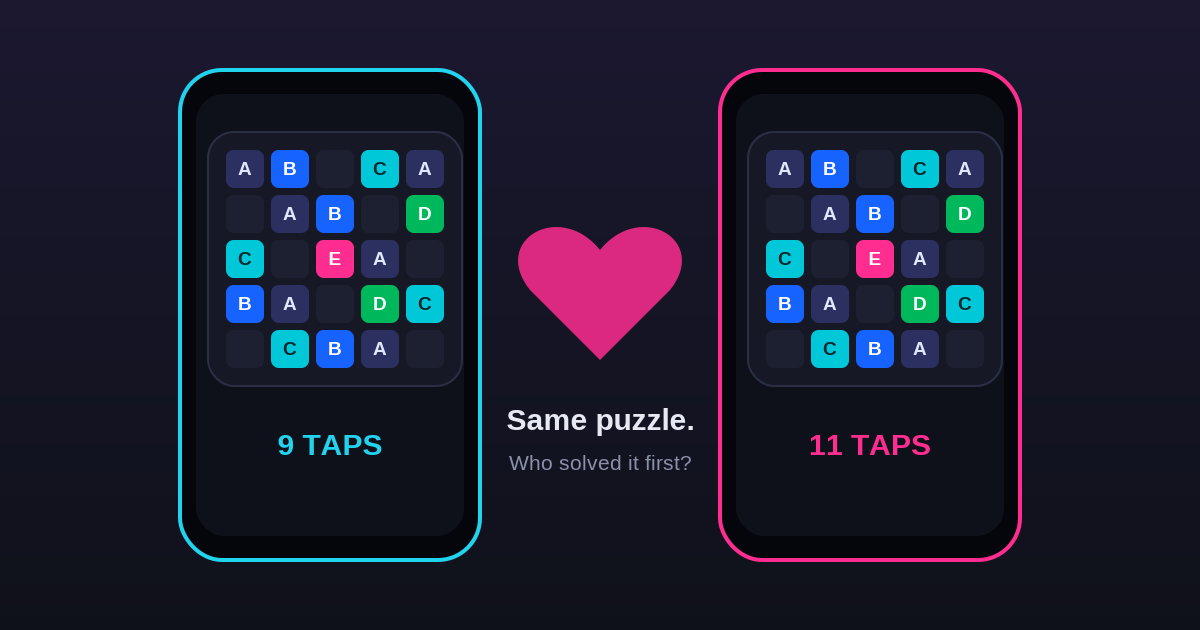
A daily puzzle is one of the easiest games for different generations to play together, because everyone gets the same board, even when you live far apart.
- Compare results in the family chat. Each person plays on their own device, then shares how they did. A group chat full of daily results is a lovely, low-effort way to stay in touch.
- Take turns on one device. Pass the phone back and forth, one move each, and debate which move is best.
- Play side by side and think aloud. Children learn to plan ahead by hearing how an adult thinks, and adults are often surprised by a child's fresh idea.
- Play over a video call. Each person plays on their own device while chatting, then reveals their result at the end.
- Set a friendly challenge. "Can anyone beat Grandpa's result this week?" Celebrate good moves, not just wins.
Can grandparents and grandchildren play together?
Yes, and puzzles are one of the few games that work well across ages. The rules are simple enough for children, the strategy is deep enough for adults, and patience and planning count for more than quick reflexes, so grandparents can hold their own.
Along the way, children practise useful skills: planning a move ahead, spotting patterns and sticking with a tricky board. In PULL they also see the alphabet in order, since every merge moves a letter one step along, from A to Z.
A few ground rules keep it fun:
- Keep it kind. Comparing results should never turn into teasing.
- Agree on limits that suit your family, such as one daily puzzle each.
- Choose games that need no account or personal details, so children's privacy is protected, and that don't pressure players to spend.
What makes a good daily puzzle?
| Quality | Why it matters |
|---|---|
| The same puzzle for everyone | Results are comparable and shareable |
| A clear goal and a limit | You know when you've won, and when you're done |
| Solvable in a few minutes | Fits into an ordinary day |
| Hard enough to need thought | A real sense of achievement |
| A spoiler-friendly way to share | Friends can compare without giving away the answer |
| A predictable reset time | You know when the next one arrives |
What is Daily PULL?
Daily PULL is a daily merge puzzle. Everyone gets the same 5×5 board of letters, and the goal is to make the letter E in 12 taps or fewer. Tap a letter and every matching letter in its row and column slides toward it; pairs merge into the next letter (A + A → B), and four in a line jump two letters at once.
- A new puzzle arrives every day at midnight UTC.
- Win to grow your streak, then share your result with friends.
- When you've finished, Endless mode is there if you want to keep playing.
New to it? The PULL strategy guide explains the rules and the tactics that help most in the Daily.
Key takeaways
- Daily puzzles date back to the newspaper crossword, first published in 1913, and were revived by Wordle in 2021.
- One puzzle a day makes each solve feel special and keeps play in proportion.
- A shared puzzle turns a solo moment into something to talk about.
- Keep streaks fun: they're a nudge, not a judge.
- A shared daily puzzle is an easy way for families, including grandparents and grandchildren, to play together.
Frequently asked questions
What is a daily puzzle game?
A game that offers one new puzzle each day, usually the same for every player. You solve it, often share your result, and come back tomorrow for the next one.
Why are daily puzzles so popular?
They're short, they give everyone the same challenge to compare, and the one-a-day limit makes each puzzle feel special while keeping play from taking over your day.
What are some games like Wordle?
There are daily puzzles for words, numbers, geography and more. If you enjoy number or tile puzzles such as 2048, Daily PULL is a daily merge puzzle with letters.
What time does the Daily PULL puzzle reset?
Daily PULL resets at midnight UTC, so everyone in the world plays the same puzzle on the same day.
What are good puzzle games to play with grandchildren?
Games with simple rules, no timers and large, clear pieces work best for mixed ages, especially a daily puzzle that everyone can play and compare, like Daily PULL.
How can families play the same game when they live far apart?
Choose a daily puzzle that's the same for everyone. Each person plays on their own device, then shares their result in a family group chat.
Is it bad to lose a puzzle streak?
Not at all. A streak is just a fun way to see your routine. Missing a day doesn't change what you've enjoyed; start a new one tomorrow.